
-
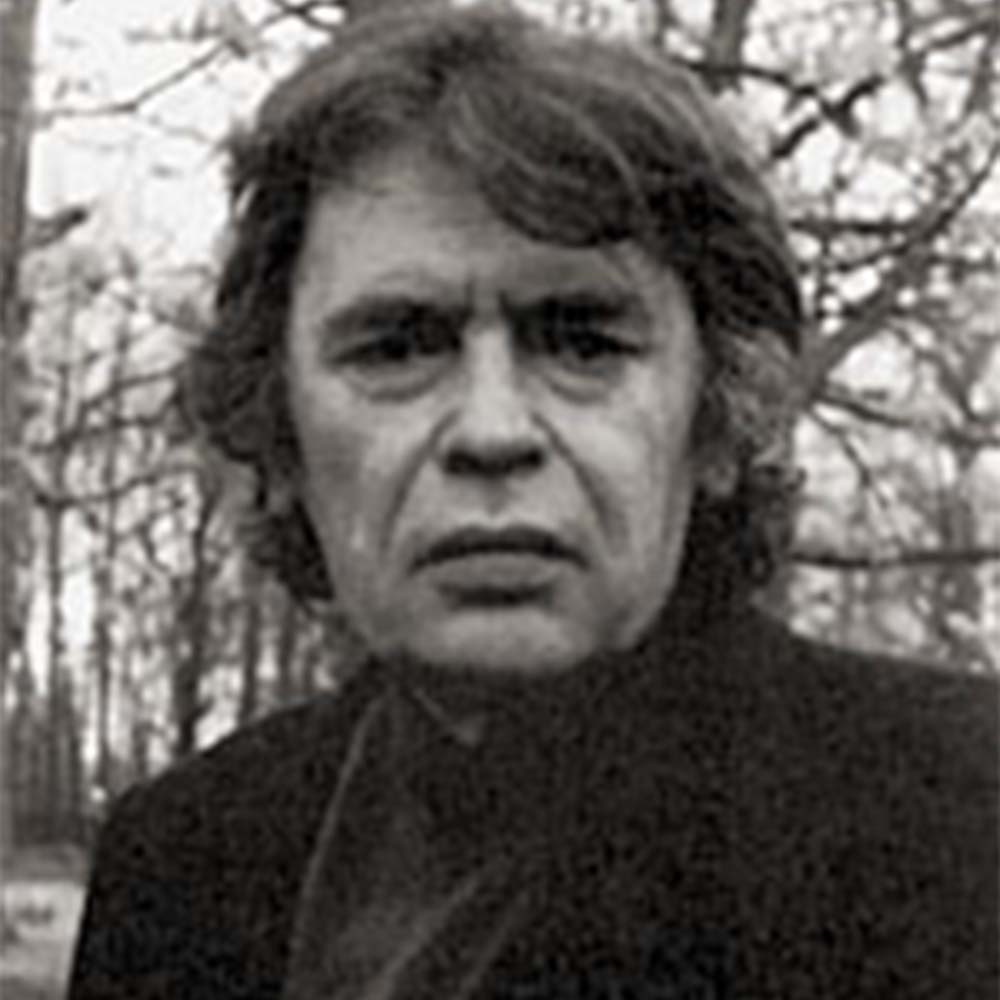
Ernst Meister (1911-1979) was born in Hagen, Germany, and studied first theology, then literature, art history, and philosophy (the latter under Karl Löwith and Hans-Georg Gadamer) at various German universities. After the publication of his first book in 1932, he published no poetry for two decades, a silent spell that ultimately gave way to the prolific last third of his life, over the course of which he produced more than sixteen volumes of verse as well as numerous other literary and visual works. Often compared to Paul Celan because of the brevity and difficulty of his poems, Meister tends toward a more abstract existentialism that renders his work both intensely emotional and inimitably strange. Having written outside the dominant literary circles of his time, he remains relatively unknown, though he was posthumously awarded the most prestigious award for German literature, the Georg Büchner Prize, having been informed of the honor just days before his death. Graham Foust and Samuel Frederick have translated Meister's informal trilogy which includes Uncollected Later Poems (1968–1979) (November 2023), In Time's Rift (Wave Books, 2012), Wallless Space (Wave Books, 2014) and Of Entirety Say the Sentence (Wave Books, 2015). Foust and Frederick have also translated his Uncollected Later Poems 1968-1979 (November 2023).
(Author photo courtesy of Rimbaud Verlag)
Check out pictures and notes from Graham Foust's visit to the Ernst Meister archives: Part 1 and Part 2. -
Reviews
His was a poetry that, as he often said, arose out of nothing, the nothing that exists between words, the space between a word and a concept, the silence where language ceases to speak....Meister’s poetry is both serious and playful. He deals with the big issues of life, love, and death, but he delights in catching the reader out. A particular trick was to hide his name, in anagrams, in his poems. His poetry is characterized, more than anything, by compression: he is sparing with language, leaving the greatest possible space for poetic effects on the mind of his reader.
Like many other Eastern European poetries, Meister's work can often feel spare and startling, bold and quiet at once. In its questioning of faith, mortality, and hope it echoes Dickinson, but the malleable sense of self and open-ended pronouns feel equally in keeping with the Language poets and those who have come after.
Arielle Greenberg, American Poetry Review
Jean Boase-Beier, The International Literary Quarterly
This is poetry’s job, if one can say that poetry ought to have a job: to take the ineffable and, using only words, which are forever getting in the way, shape it into something that the reader can experience in a way that feels real, or if not real, at least comprehensible. Ernst Meister...did this very well.
Alex Estes, The Rumpus
Meister's work is mesmerizingly succinct and elusive, but also ambitious to a degree almost unheard...
Seth Abramson, Huffington Post
Like his subject matter, Meister’s writing is ominous, intangible, and inescapable.
Publishers Weekly
Reviews of books by Ernst Meister
Of Entirety Say the Sentence
Wallless Space
In Time's Rift
